2 Miles Squared is a project that brings together community, craft skills, sustainability, and curiosity.
Who?
In early 2025 there were three project partners looking to develop projects as part of their programmes; PLUS Perth – a member-led mental health charity in Perth City Centre, Culture Perth and Kinross, and Perth UNESCO City of Craft. The partners came together and began collaborating, realising that their goals and ambitions overlapped and a combined project would have more scope and impact. Plus Perth were looking for ways to use their community garden, Horner’s Plot. Culture Perth and Kinross, led by the AK Bell Library’s Sustainability Officer, was interested in working with the Seed Library and introducing flax harvesting back into Perth, and Perth UNESCO City of Craft was looking for a project where a garment could be produced with resource and knowledge within 2 square miles to open up conversations about resource, scope, sustainability, and craft.
These ideas combined to create 2 Miles Squared – a project where a community came together to grow flax from seed, to learn how to process it, to prepare it for weaving, and to weave it into a wearable garment. There were many unknowns with this project, nobody at Plus Perth, Culture Perth and Kinross, or Perth City of Craft had done a project like this before, so we enlisted the skills, knowledge, and curiosity of local ethnobotanist, Seona Anderson.
The entire project was filmed to produce a short documentary film called 2 Miles Squared, produced by LightPress Media, available at scheduled viewings.
What?
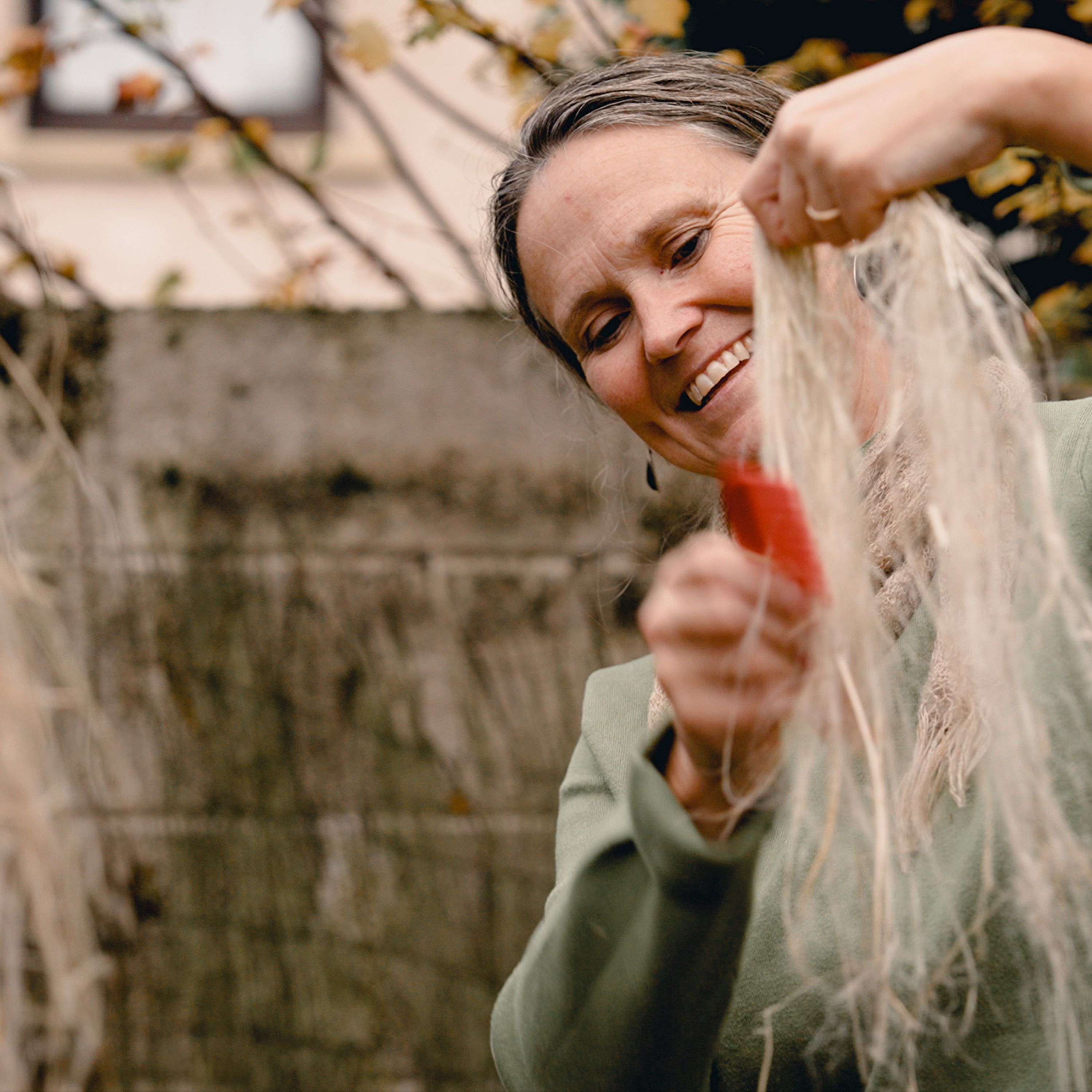
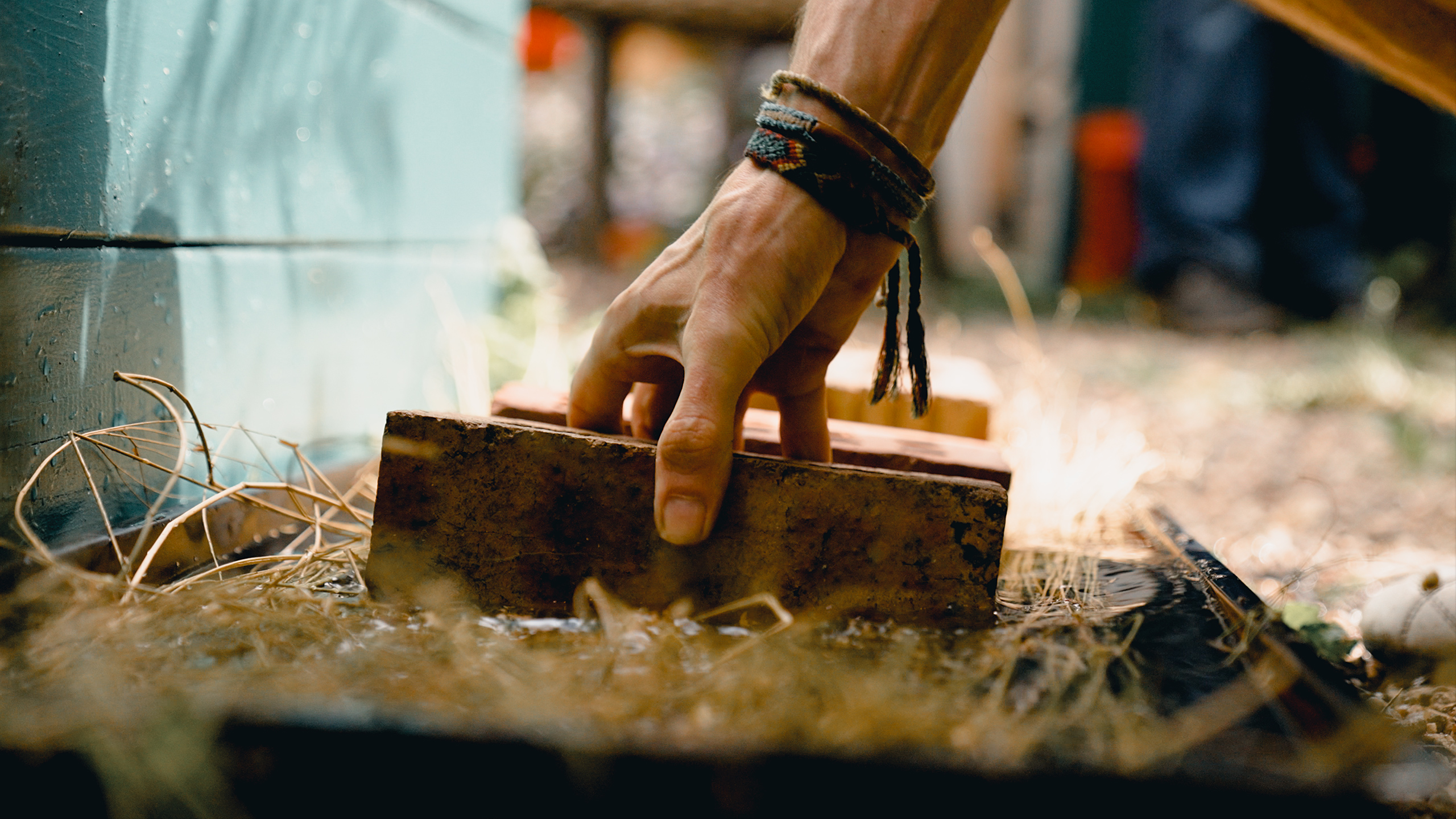
The team, made up from volunteers from Plus Perth and from AK Bell’s Lend and Mend hub, sowed flax seeds in Horner’s plot, led by Seona Anderson. They tended them as they grew into long stems with pretty blue flowers. Once harvested, the stems needed to be dried, then retted (which means to be submerged in water to soften the fibres, but without letting them rot), dried again, then scutched (the team made their own scutchers which is a wooden device which breaks the outside of the dried stem to reveal the flax fibres within), then heckled (passed through a comb-like tool made from nails to divide the fibres and remove debris), then twisted into yarn, before being woven by hand.
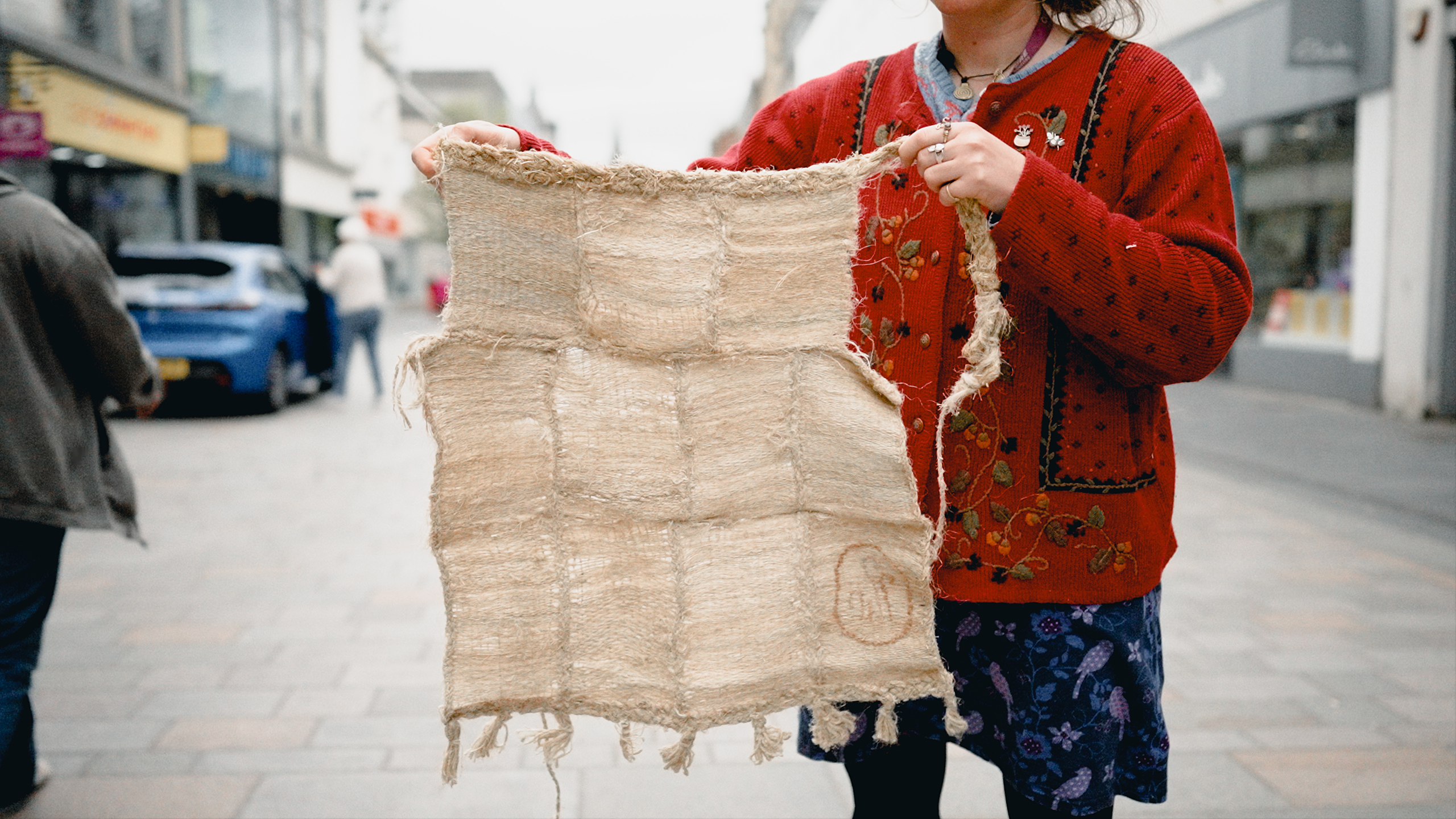
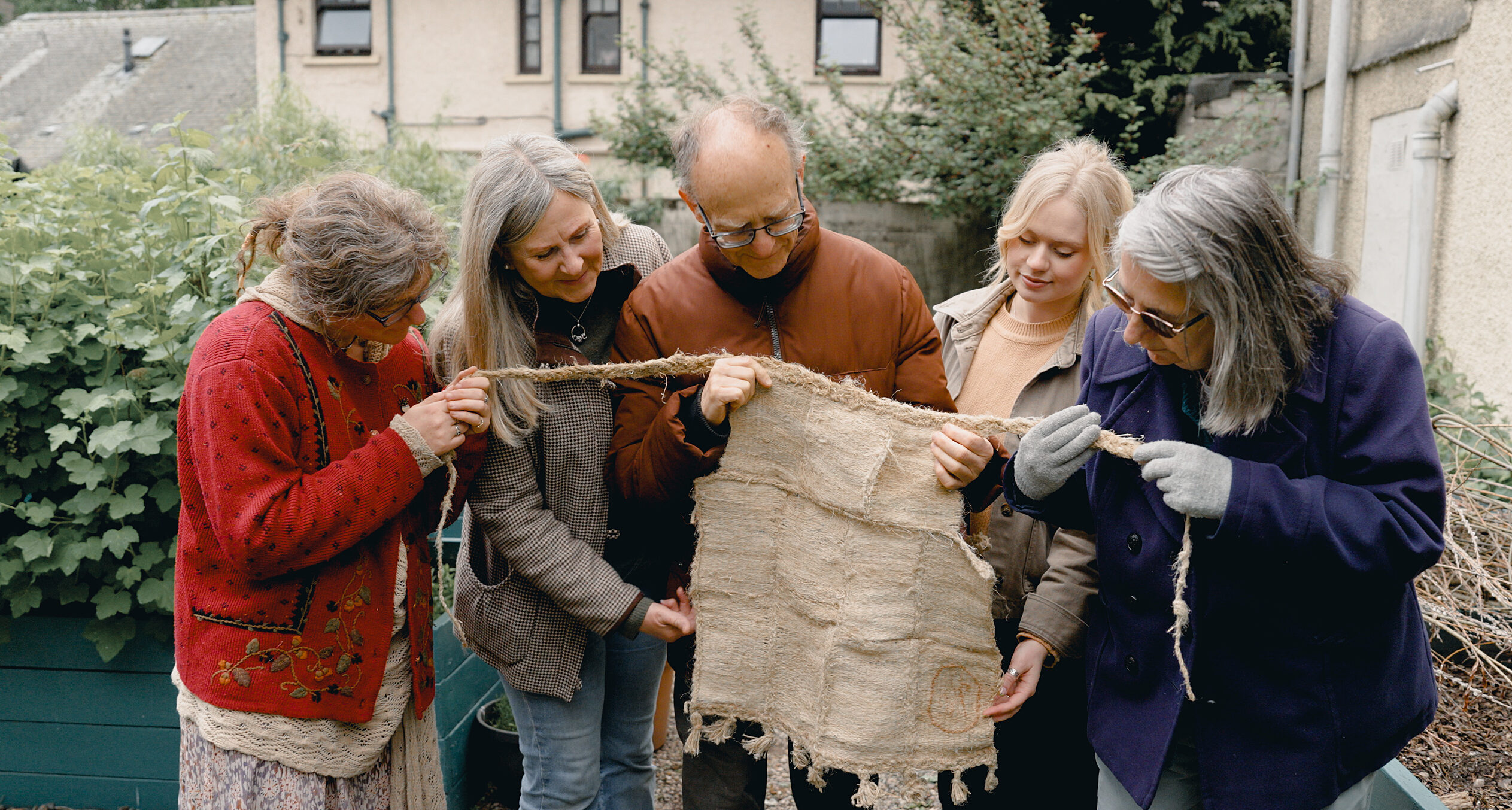
Over the weeks and months it took to plant, tend, and process the flax, the question was raised; what should the final garment be? Initially it was difficult to plan as we didn’t know whether the flax would grow, how much our crop would produce, whether the retting would rot the stems, and if the scutching would produce usable fibres. Once we realised that we had enough to make a substantial garment, the group decided that the garment should be based in craft and celebrate the process of making it. The final design was chosen: a medieval-style makers apron – a universal craft garment.
Why?
The fashion industry has a huge impact on greenhouse emissions globally, with some estimates saying it contributes to up to 10% of total global emissions, this is higher than the emissions of international flights and shipping combined. Clothing and fashion rely on natural resources like cotton and water, but also on the production of synthetic materials which require significant energy to make. Some fast fashion items can travel around the world many times during their manufacture process, the material being made in one place, dyeing done in another, with cutting, sewing, and finishing all potentially being done in separate locations, countries, and continents. The idea of a garment create from seed to final stitch within Perth City Centre is proof that our clothes don’t need to travel more in their production than the average wearer does in a year.
Perth, which was known as a ‘Craftis Toun‘ in the Medieval period, was a known exporter of cloth during the later Middle Ages. Bringing flax production and weaving skills back into local communities offers a powerful way to reconnect Perth with an important part of its cultural and industrial heritage. Linen production flourished here from the late 17th century, with Perth developing a substantial linen trade and textile production taking place not only in the town but in homes and rural communities across the region. The landscape itself retains traces of this history, including flax retting ponds and lint mills used to prepare flax for weaving. Reviving these skills today can transform this heritage from something we simply preserve and study into a living tradition, giving communities opportunities to learn, make and share knowledge while strengthening the connection between local materials, people and place. This is particularly relevant given that the regional archaeological research framework identifies both handloom weaving and the historic preparation of flax as priorities for further investigation.
This project also highlights the impact that craft can have on wellbeing too. Craft has been prescribed to patients for decades with basketry used to relieve anxiety and physical ailments in soldiers during the first world war. Craft and creativity can play a powerful role in supporting our wellbeing. Research into craft-based activities has shown that taking part in making can help to improve mood and reduce feelings of stress and anxiety. Whether knitting, baking, gardening or working with our hands in other ways, the process of making offers an opportunity to slow down, focus, learn and experience the satisfaction of creating something ourselves.
2 Miles Squared brings these strands of sustainability, heritage and wellbeing together, demonstrating what can be achieved when local organisations combine their knowledge and expertise. By growing, processing and making with flax within the city, the project creates opportunities for people to learn traditional skills, build confidence and connections, and think differently about where our clothes and materials come from. In doing so, 2 Miles Squared is not simply looking back at Perth’s past, but exploring how its craft heritage can become a living resource for a healthier, more sustainable and connected community.
What happened?
This project was a trial to see if it was possible to do a project like this in Perth City Centre, it was an experiment and an exploration, but in the end, the outcome was so much more than a woven apron. The project saw a community grow, local people reacquainted with lost craft skills, and a year-long project of radical hope, learning, and support.
Hopefully the finished apron will be on display across Perth and Kinross for pop-up exhibitions, and there will be scheduled screenings of the 2 Miles Squared film. Keep an eye on the Culture Perth and Kinross events page or @PerthCityofCraft on Instagram and Facebook for updates.
Get Involved
If you would like to grow your own flax, you can get seeds from the Perthshire Seed Library, as well as advice on growing from the Facebook Group of like-minded growers.
If you’re interested in sustainable fashion, upcycling, mending, and working with textiles, you can use Lend and Mend for free at AK Bell Library and Scone Library, and gain access to sewing machines, overlockers, and a well-stocked haberdashery.
You can also join PLUS Perth, amember-led mental health charity and social movement in Perth and Kinross. Our values include trust, honesty, equality, justice, community spirit, partnership working, love and compassion.
If you would be interested in hosting a free screening of the 2 Miles Squared documentary, please contact [email protected].
All images in this post are stills from 2 Miles Squared short documentary film by LightPress Media.